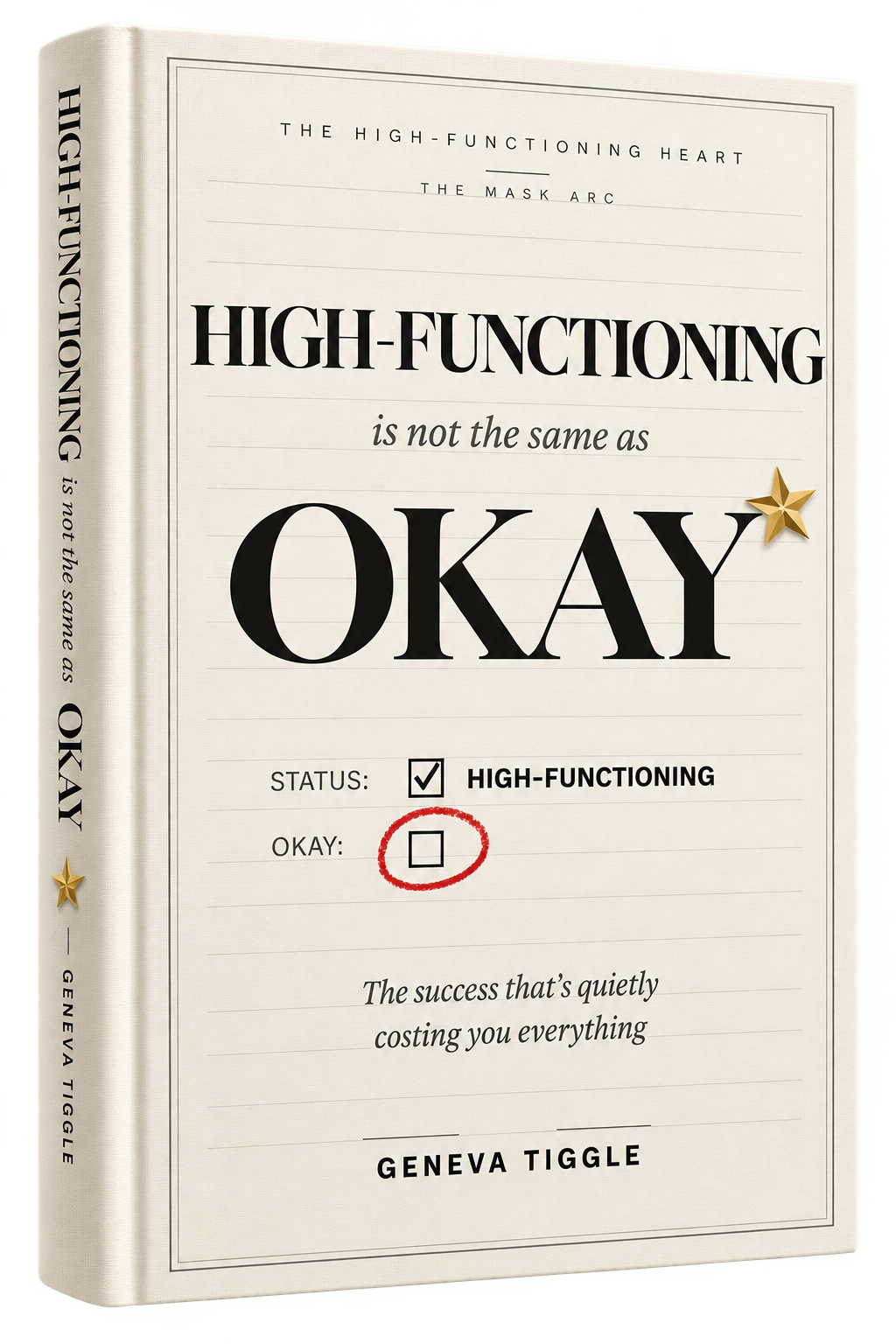
Read the first chapter
Chapter 1: The Best-Reviewed Emergency in the Building
Let's start with a thought experiment you're not going to like.
Imagine a machine — a good one, industrial grade, the pride of the floor. It runs every day. Output: excellent. Uptime: legendary. But here's the thing about this particular machine: years ago, its maintenance schedule quietly fell off the calendar. No oil changes, no part replacements, no cool-down cycles. It kept running anyway, because it was built well, and everyone — floor manager, owners, the machine itself, if machines could talk — took the continued output as proof that maintenance must not have been necessary after all. Every quarter it runs without service becomes evidence for running it another quarter.
Question: is that machine fine?
You know it isn't. You know — because you understand systems better than almost anyone — that the machine is in the most dangerous condition a machine can be in: failing invisibly, with excellent output. The output isn't evidence of health. The output is masking the absence of health. The wear is all internal — bearings, tolerances, metal fatigue — accumulating in exactly the places nobody inspects, because why would you inspect a machine that's hitting its numbers?
You see where this is going. Sit with it anyway, because the mapping is more precise than you think.
Your output is excellent. Your uptime is legendary. And your maintenance schedule — real rest, actual joy, being known by other humans, unstructured time, the entire category of activity that restores a person rather than merely stops depleting them — fell off the calendar years ago. Not dramatically. It was crowded out, item by reasonable item, each one deferred for a good reason, until deferral stopped being a decision and became the standing default. And your continued output — this is the trap, the exact trap of the good machine — your continued output became the evidence that the maintenance must not have been necessary. You're still performing, so you must be fine. You're still hitting the numbers, so the numbers must mean health.
Here is the sentence this whole book stands on, so let's carve it properly:
Functioning is measured by what you produce. Okay is measured by what it costs you to produce it. They are different gauges, they can read in opposite directions for years — and you have been navigating by exactly one of them.
Think about what that means. A person can be simultaneously at the top of their output curve and deep in the red on cost — and by construction, nobody will notice, because every observer in their life is reading the output gauge. The boss reads output. The family reads output (dinner made, logistics run, presence simulated). The doctor, in a seven-minute appointment, reads output ("you're working? sleeping okay-ish? great"). Social media reads output. And you — this is the cruelest part — you read output too, because output is the only gauge anyone ever taught you to read. Somewhere in the gold-star years, you learned that the answer to "how am I doing?" lives outside you: grades, reviews, other people's relief. The internal gauge — the cost meter — never got wired to anything. It's been spinning in a dark room your whole adult life.
So let me tell you what the cost meter has been recording, because in Part One we're going to wire it back up, and I want you to know what kind of readings to expect. It's been recording the mornings you wake up done-waiting rather than rested. The way "looking forward to things" quietly became a memory rather than an experience. The margin that's gone — how any small extra demand, a traffic jam, a canceled sitter, a printer error, now lands with a rage or despair completely out of scale, because there is no buffer left to absorb it. The person you are at 9 p.m., which nobody at 9 a.m. would recognize. The vacation that requires three days of decompression before it starts working and gets mourned like a death when it ends. None of that showed up on the output gauge. All of it is on the meter.
And one more reading, the big one, the red-light one: the slow disappearance of wanting. Depletion's deepest signature isn't exhaustion — you've normalized exhaustion; it's that desire itself goes offline. Ask yourself the question I couldn't answer at that red light: what did you want today? Not what did you handle, choose strategically, or check off. Want. If the question lands in an empty room — if wanting has quietly become something other people do — the machine has been running without an operator for longer than you know.
That's the diagnosis we're building toward, and I want to close the chapter by disarming the objection you're already drafting: but I really am high-capacity. Maybe this is just what my level of performance costs. No. Capacity is real, yours is genuinely large, and this book will never ask you to shrink it. But capacity is throughput, not fuel. The largest engine ever built still takes oil. What you've been calling your capacity for years is, in truth, your capacity plus your reserves — you've been burning the tank and calling it the engine. The audit ahead is just the difference between those two numbers.
Say it out loud
"Functioning is what I produce. Okay is what it costs. They are not the same gauge."